
Concrete Patio vs. Paver Patio: Best Choice for Sandy Homes
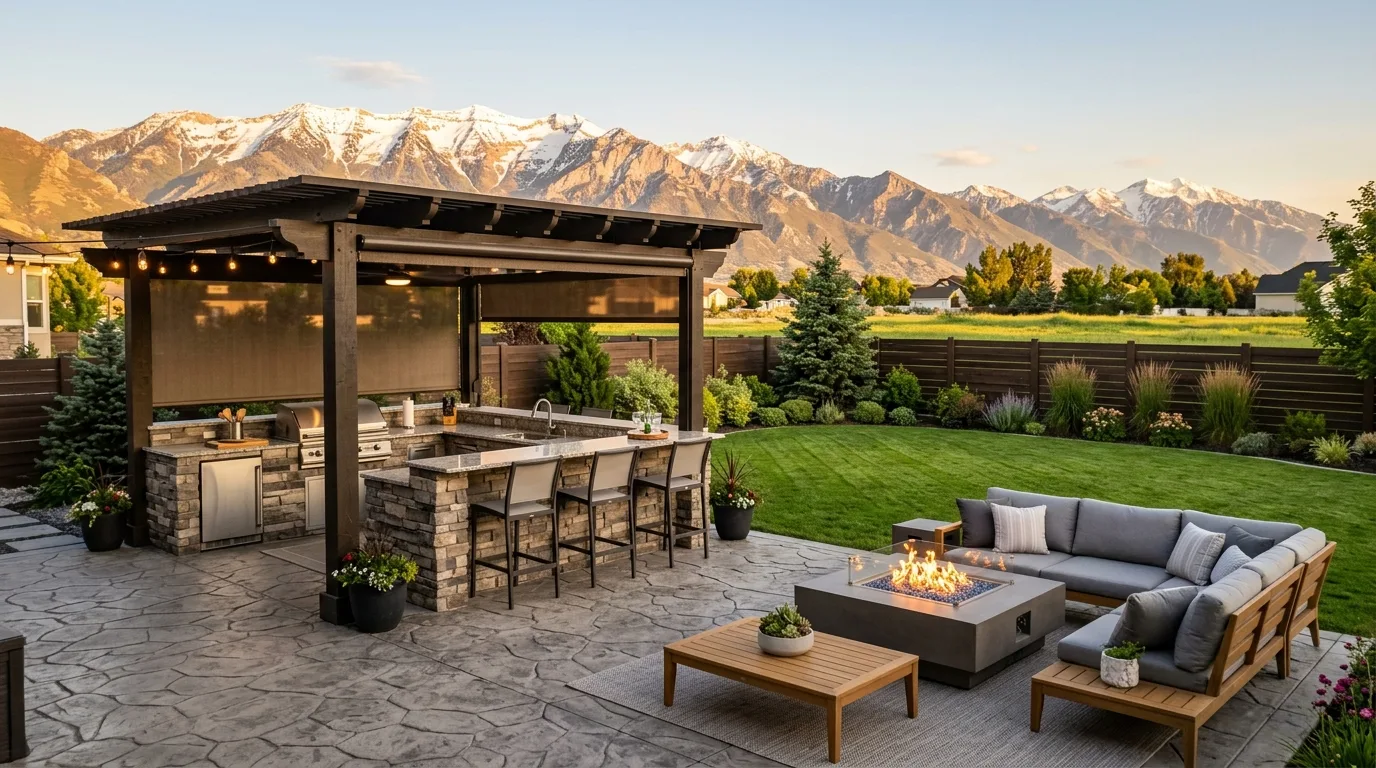
Homeowners in Sandy, Utah choosing between a concrete patio and a paver patio are facing a real decision — one that looks different in Salt Lake County’s freeze-thaw climate than it does in the Arizona and Florida patio comparison articles most homeowners find online. Sandy’s winters stress both concrete slabs and paver installations in ways milder markets don’t experience, and the right choice depends on your specific use case, maintenance commitment, budget, and tolerance for seasonal maintenance. This guide gives you a Sandy-specific comparison of concrete and pavers so you can make an informed decision for your Wasatch Front home.
Free Concrete Patio Estimates in Sandy
Sandy Concrete Pros designs and installs concrete patios built for Utah's freeze-thaw seasons. Call (888) 376-0955.
Why the Comparison Is Different in Sandy Than Other Markets
Most concrete vs. paver comparisons are written for mild climates where neither material faces significant freeze-thaw stress. Sandy’s climate changes the analysis meaningfully. Concrete slabs in Sandy face freeze-thaw hydraulic pressure that requires air-entrained mixes, proper joint placement, and sealing to survive without cracking. Pavers in Sandy face joint sand migration from freeze-thaw movement and weed infiltration from snowmelt water channels — problems that don’t occur in dry, warm climates. Both materials can perform well in Sandy, but both require climate-appropriate installation and maintenance that costs more than comparable work in milder markets.
Understanding which material’s failure mode better fits your maintenance style and budget determines which is the better choice for your Alta Canyon or Pepperwood patio project.
Types of Concrete Patio Options for Sandy Homes
Plain Gray Broom Concrete: Most affordable option at $5–$8 per square foot installed. Excellent durability in Sandy’s freeze-thaw climate when installed with air-entrained concrete, proper joint spacing, and initial sealing. No pattern or color, but a clean functional surface that requires only sealing maintenance.
Stamped Concrete: Decorative concrete patio at $12–$20 per square foot. Mimics pavers, stone, and slate with patterns and colors. Monolithic slab with no joint gaps — no weed growth, no joint sand, no individual piece migration. Requires sealing every 2–3 years. Most popular decorative concrete choice in Sandy.
Exposed Aggregate: Decorative surface with stone aggregate visible. $8–$12 per square foot. Good natural traction, no pattern maintenance, requires sealing. Complement to Salt Lake County’s stone-heavy aesthetic.
Concrete Overlay (on existing slab): Applies new decorative concrete surface to existing sound slab. $8–$15 per square foot. Cost-effective upgrade for homeowners with a structurally sound existing patio in Sandy’s Crescent or Dimple Dell Heights neighborhoods.
Types of Paver Patio Options for Sandy Homes
Concrete Pavers (Brick-style): Modular concrete paver units 2.5–3.25 inches thick, installed on compacted base with sand-set joints. Cost: $15–$25 per square foot installed. Allows individual unit replacement if damaged. Joint sand requires replenishment after Sandy winters.
Natural Stone Pavers: Travertine, slate, bluestone, or sandstone cut and set individually. Most aesthetically premium option; $20–$40+ per square foot installed. Requires sealing for freeze-thaw protection in Sandy. Less consistent joint geometry than manufactured pavers.
Permeable Pavers: Specialty pavers with wider joints designed for stormwater infiltration. Higher cost ($18–$30 per square foot) with specialized base installation. Reduced runoff is a benefit on Sandy’s foothill lots; more maintenance to keep joints clear.
Practical Comparison: Sandy Homeowners’ Most Important Factors
- Upfront cost: Concrete slabs (plain or stamped) cost 10–40% less than comparable pavers installed in Sandy. A 400 sq ft stamped concrete patio ($4,800–$8,000) typically costs 30–50% less than a comparable paver patio ($6,000–$10,000).
- Freeze-thaw durability: Concrete slabs with proper air entrainment resist freeze-thaw pressure well and are monolithic — no joint sand to migrate. Pavers flex with the sub-base in freeze-thaw, which prevents cracking but requires annual joint sand replenishment after Sandy winters.
- Maintenance: Concrete requires sealing every 2–3 years and crack repair if joints are missed. Pavers require joint sand replenishment annually in Sandy, possible weed treatment, and occasional releveling of settled units.
- Repairability: Pavers allow individual piece replacement if a unit cracks — a real advantage in Sandy where accidental damage is possible. Concrete cracks require patching that’s visible as a repair; full resurfacing restores uniform appearance but adds cost.
- Weed growth: Concrete patio has no joints — no weed growth pathway. Pavers require annual weed control or polymeric sand with joint stabilizer.
- Aesthetics: Pavers have depth and dimensionality that concrete stamping approximates but doesn’t fully replicate. For the most authentic stone or brick look, pavers win. For the widest design flexibility in patterns and custom colors, stamped concrete wins.
- Resale value: Both materials add comparable value in Sandy’s market. Stamped concrete is more common and broadly appealing; premium natural stone pavers add more value in higher-end properties near Little Cottonwood Canyon access.
How Sandy’s Climate Tips the Scales
For homeowners who want to minimize maintenance, concrete is the better choice in Sandy’s climate. A properly installed, sealed concrete patio has no joints to maintain, no annual sand replenishment, and no individual settling pieces to relevel. The maintenance requirement (sealing every 2–3 years) is a single scheduled task rather than the multiple annual tasks pavers require in a freeze-thaw climate.
For homeowners who prefer the authentic look of natural stone or brick and are willing to invest in annual maintenance, pavers perform well in Sandy when installed with a proper deep base and polymeric sand in joints. The individual-unit flexibility of pavers is a real advantage for Sandy’s complex soil conditions — small surface movements that would crack a monolithic slab just shift individual paver units that can be releveled.
Sandy Concrete Patio — Free Design Consultation
Sandy Concrete Pros helps you choose the right material and design for your specific Sandy property and maintenance preferences. Call (888) 376-0955.
Cost Comparison for Sandy Patio Projects
For a typical 400 sq ft Sandy patio:
- Plain concrete: $2,000–$3,200 (concrete work only), $3,500–$5,500 total project
- Stamped concrete: $4,800–$8,000 total project
- Exposed aggregate: $3,200–$4,800 total project
- Concrete pavers: $6,000–$10,000 total project
- Natural stone pavers: $8,000–$16,000+ total project
Over a 20-year horizon, concrete’s lower upfront cost and simpler maintenance structure typically gives it a total cost-of-ownership advantage in Sandy of 15–30% compared to comparable pavers — despite both materials’ long lifespans.
Frequently Asked Questions
Do pavers hold up better than concrete in Sandy’s freeze-thaw climate?
Neither material is clearly superior in Sandy’s climate — they fail differently. Concrete slabs can crack under freeze-thaw hydraulic pressure without proper air entrainment and joint placement. Pavers flex individually with freeze-thaw but lose joint sand and settle unevenly over time. Both work well in Sandy when properly installed; the right choice depends on your maintenance preference and aesthetic goals, not freeze-thaw performance alone.
Can I convert a paver patio to concrete in Sandy?
Yes — an existing paver installation can be removed and replaced with concrete, or (if the paver base is adequate) an overlay approach can apply concrete over the paver surface. Both approaches require professional assessment of the existing sub-base condition. Sandy Concrete Pros evaluates existing paver installations and recommends the most cost-effective path to a concrete patio surface.
How long does a concrete patio last in Sandy, Utah?
A properly installed concrete patio with air-entrained concrete, adequate base preparation, and regular sealing lasts 25–40 years in Sandy. The key maintenance steps are sealing every 2–3 years, avoiding de-icing salts on the patio surface, and promptly repairing any cracks that form before winter allows freeze-thaw expansion to widen them. See our full guide on when to seal concrete in Sandy for the maintenance schedule.
Sandy Patio Experts — Concrete & Stamped Specialists
Free estimates for concrete patio installation in Sandy and Salt Lake County. Call Sandy Concrete Pros at (888) 376-0955.
Related: