
Sandy Utah Concrete Repair: Cracks, Spalling & Settling
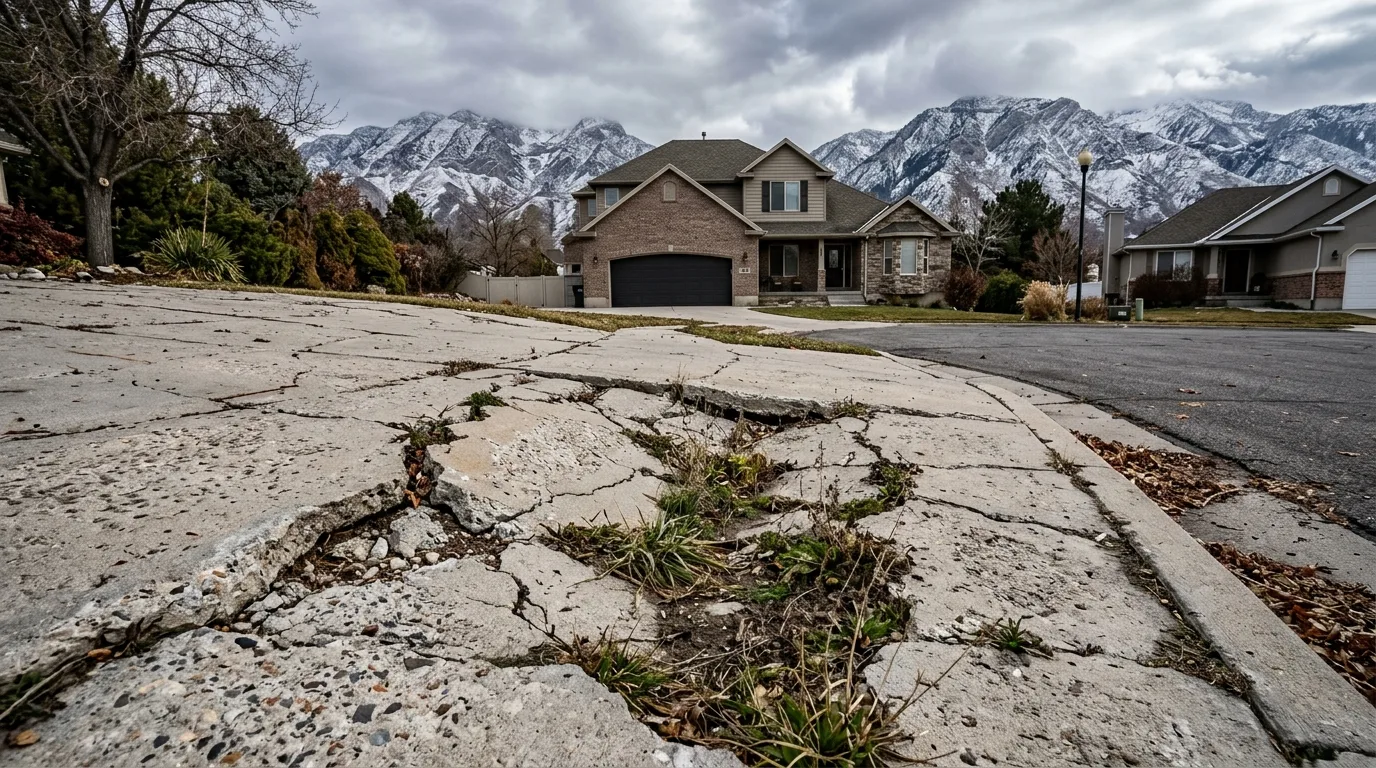
After every Sandy winter, homeowners discover damage to driveways, patios, and sidewalks that wasn’t visible before the snow fell. Concrete repair in Sandy, Utah is a seasonal reality — the freeze-thaw cycles that define Salt Lake County’s winters create specific damage patterns that require specific repair approaches. Getting the repair type wrong means spending money on a fix that fails by next spring. This guide identifies Sandy’s most common concrete damage types, explains the correct repair approach for each, and gives you a framework for deciding when repair is the right call and when replacement is the better investment.
Free Concrete Repair Assessment in Sandy
Sandy Concrete Pros diagnoses the cause before recommending a repair. Free on-site evaluations throughout Salt Lake County. Call (888) 376-0955.
Why Sandy’s Concrete Damage Requires Local Knowledge
Concrete repair in Sandy, Utah is different from concrete repair in milder markets because the damage mechanisms are different. A crack that looks cosmetic in California may represent structural freeze-thaw progression in Sandy — because the same crack that sits stable in a dry, mild climate will absorb snowmelt, freeze, expand, and widen progressively through each of Sandy’s winter seasons. The repair approach that works in a mild climate (flexible caulk in a shrinkage crack) is often insufficient for Sandy conditions (polyurethane injected crack fill with drainage correction).
Experienced concrete repair contractors in Salt Lake County know to look for the root cause — drainage issues, sub-base voids, de-icing salt damage, or expansive soil movement — not just the surface symptom. The most expensive concrete repairs in Sandy are the ones done twice because the root cause wasn’t addressed.
Types of Concrete Damage in Sandy
Hairline Cracks: Under 1/16 inch wide, typically running diagonally or randomly across a slab. Usually caused by normal concrete shrinkage during original curing. Seal with a thin-viscosity penetrating sealant to prevent moisture infiltration. In Sandy’s freeze-thaw climate, even hairline cracks that go untreated widen over 3–5 winters as water infiltrates and expands.
Structural Cracks: 1/4 inch or wider, often with differential height between the two sides of the crack. Indicate sub-base movement, improper joint placement, or structural loading beyond the slab’s design. Require polyurethane injection for flexibility, combined with drainage assessment. Cracks that have differential height (one side higher than the other) indicate active sub-base movement in Sandy’s alluvial soils.
Surface Spalling: The top layer of concrete (1/8 to 1/4 inch) flakes away, exposing aggregate. Caused by freeze-thaw cycle failure of the cement paste surface layer, often accelerated by de-icing salt use. Repair with polymer-modified mortar overlay after surface preparation. In Sandy, spalling that covers more than 30% of a slab’s surface typically indicates the full slab surface layer has failed and full resurfacing is the most cost-effective approach.
Settling: Sections of a slab have dropped relative to adjacent sections. In Sandy, caused by sub-base erosion from snowmelt channeling beneath the slab, alluvial soil compaction, or expansive clay shrinkage during dry periods. Address with mudjacking (grout pumped beneath the slab) for moderate settlement. Significant settlement or voids require slab replacement with corrected base preparation.
Heaving: Sections pushed upward — by frost heave in Sandy’s colder areas or by expansive clay swelling in wet periods. Heaved panels become trip hazards and must be addressed. If heaving recurs after grinding down the high panel, the underlying soil condition must be addressed.
Edge Crumbling: Concrete at driveway edges or slab corners crumbles away. Common in Sandy where vehicle tires repeatedly cross unsupported edges. Repair with bonded edge restoration using polymer-modified mortar. Prevention requires thicker concrete at driveway edges (minimum 6 inches at edges for vehicle-load areas).
Practical Repair Approaches for Sandy Homeowners
- Small crack fill (under 1/4 inch, isolated): DIY or professional polyurethane crack fill. Cost: $10–$50 DIY product cost, $100–$300 professional. Suitable for most hairline and early structural cracks.
- Major crack fill (1/4 inch or wider, multiple): Professional application with surface preparation, polyurethane or epoxy injection for structural cracks, and drainage correction if needed. Cost: $200–$600 per major crack with root cause assessment.
- Spall repair (moderate area, under 30% of surface): Polymer-modified mortar spot repair at $150–$500 per area depending on square footage. Professional surface preparation (shot-blasting or scarifying) for proper adhesion.
- Concrete resurfacing (over 30% spalled or worn): Full surface preparation and bonded overlay application at $3–$10 per square foot. Most cost-effective approach for widespread surface failure on a structurally sound slab.
- Mudjacking: $1,500–$4,000 for a standard residential driveway section. Appropriate for settled slabs with voids beneath — not for actively failing slabs with structural cracking.
- Full replacement: At $5–$8 per square foot, total project cost $5,000–$12,000 for a standard Sandy driveway. The right call when repair would approach 50% of replacement cost or when the slab is structurally compromised beyond economical repair.
How to Choose the Right Repair Approach
The repair-vs-replace decision for Sandy concrete comes down to: Is the slab structurally sound? Is the underlying cause addressable without replacement? Will the repair’s expected lifespan justify its cost in Sandy’s freeze-thaw environment?
A crack fill that doesn’t address the drainage root cause will re-open. A resurfacing overlay on a slab with active sub-base movement will delaminate. In Sandy’s climate, any concrete repair must account for future freeze-thaw cycles — the repair approach must be as resistant to future damage as new construction would be, or the investment is wasted.
Sandy Concrete Repair — Root Cause First
We diagnose before we recommend. Free on-site assessments for cracked, spalled, or settling concrete in Sandy. Call (888) 376-0955.
Cost Factors for Concrete Repair in Sandy
Concrete resurfacing in Sandy costs $3–$10 per square foot depending on overlay thickness and polymer content. Crack fills range from $100–$400 per crack. Mudjacking for settled sections runs $1,500–$4,000. The earlier damage is addressed, the lower the total cost — cracks treated at 1/4 inch cost far less than cracks allowed to widen to 1 inch and undermine the sub-base. Annual spring inspection after winter allows you to catch Sandy’s freeze-thaw damage at the most economical repair stage.
Frequently Asked Questions
What causes concrete cracks in Sandy, Utah?
The primary causes of concrete cracking in Sandy are freeze-thaw cycle hydraulic pressure, improper joint placement that forces cracks to occur randomly rather than at planned cut lines, sub-base movement from alluvial soil compaction or expansive clay swelling, and de-icing salt chemical attack on the cement paste surface. Secondary causes include vehicle loads exceeding the slab’s design capacity, tree root infiltration near sidewalks, and original installation defects like insufficient base depth or low-quality concrete without air entrainment.
How do I stop concrete from cracking in Sandy?
Preventing concrete cracking in Sandy requires air-entrained concrete for freeze-thaw resistance, proper expansion joint placement every 8–10 feet in driveways and every 4–6 feet in walkways, penetrating sealer applied after curing and reapplied every 2–3 years, avoiding de-icing salts (use sand instead), and prompt repair of any cracks before they can widen and allow water infiltration through a winter cycle. See our complete freeze-thaw guide for full specifications.
What is concrete resurfacing and does it work in Sandy?
Concrete resurfacing applies a thin polymer-modified concrete overlay to an existing slab surface, restoring appearance and waterproofing without full demolition. It works well in Sandy when applied to a structurally sound slab with adequate drainage and no active sub-base movement. Resurfacing fails when applied to slabs with structural cracking, active settlement, or poor drainage — the overlay can’t compensate for movement in the substrate below it. Professional assessment before resurfacing is essential in Sandy because the freeze-thaw environment reveals installation quality deficiencies much faster than milder climates.
Sandy Concrete Repair — Free Assessment This Spring
Sandy Concrete Pros evaluates winter damage and provides repair options that last. Call (888) 376-0955 for your free on-site assessment.
Related: