
Sandy Concrete Driveway: Repair vs. Replacement Guide
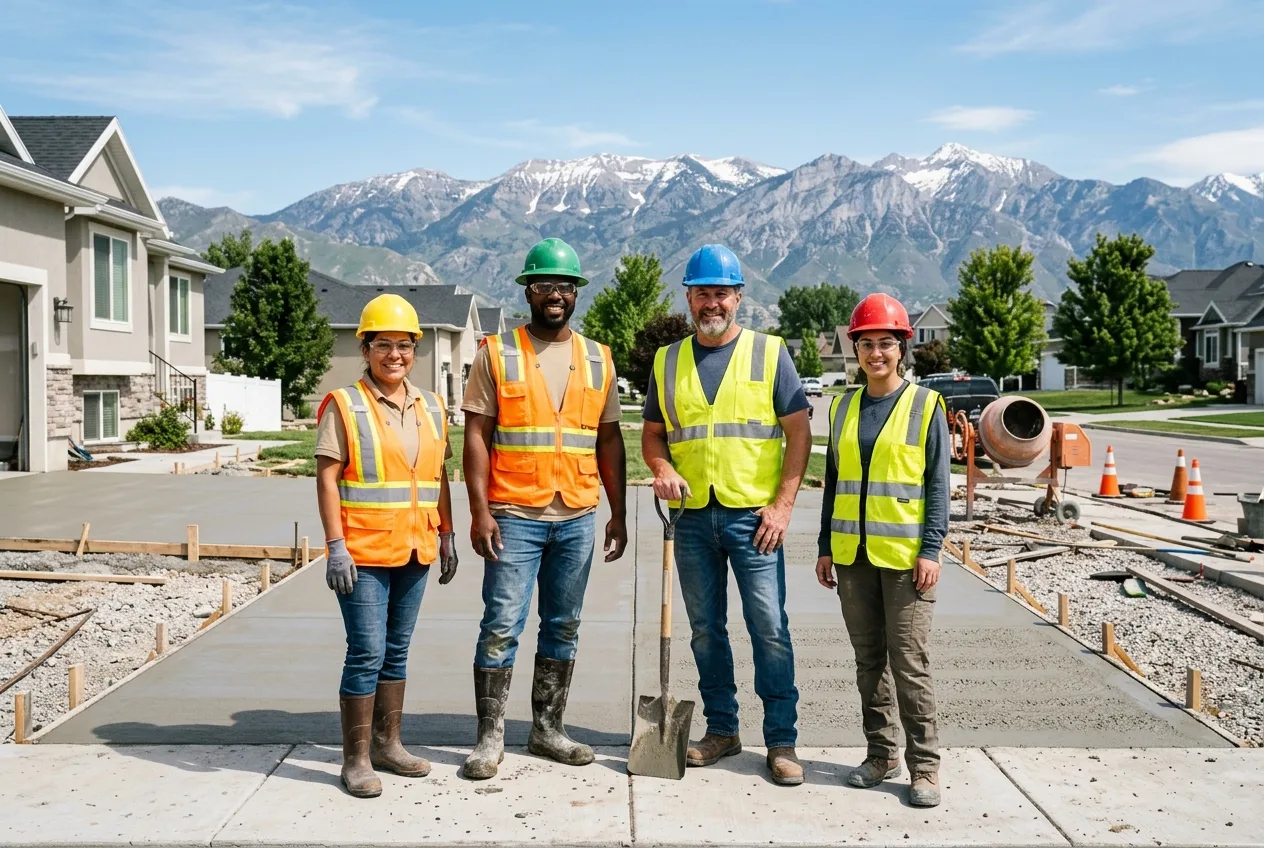
After a Sandy winter, your driveway may be showing cracks, surface scaling, or uneven sections — and the question is whether to repair what you have or start fresh. This is one of the most common questions we get from Sandy homeowners in the spring, and the answer isn’t always obvious. The right decision depends on the type of damage, the age and original quality of the installation, and whether the underlying cause can be addressed without full replacement. In this guide, we walk through a systematic repair-vs-replace framework specific to Salt Lake County’s concrete conditions.
Free Repair-vs-Replace Assessment in Sandy
Sandy Concrete Pros gives honest recommendations — we never upsell replacement when repair is the right call. Call (888) 376-0955.
Why the Repair-vs-Replace Decision Matters in Sandy’s Climate
In Sandy, the repair-vs-replace decision has higher stakes than in milder markets because freeze-thaw cycle frequency means that an inadequate repair fails fast. A surface patch over a slab with a failed sub-base will crack open within one to two winters. A resurfacing overlay over concrete that has lost structural integrity will delaminate in 3–5 freeze-thaw seasons. The money spent on a repair that doesn’t address the root cause is often money lost — but a repair that does address the cause and is well-executed can add 10–20 years to an otherwise sound driveway in Sandy’s Pepperwood or Alta Canyon neighborhoods.
The other factor is the original installation quality. Sandy driveways installed before air-entrained concrete was standard, or those installed with inadequate base depth, have a shorter theoretical lifespan regardless of surface condition. If your driveway is 25–30 years old and showing widespread damage, repair economics favor replacement — not because repair isn’t possible, but because the remaining service life after a surface-only repair is limited by the slab’s overall degradation.
Types of Damage and What They Indicate
Hairline Cracks (under 1/8 inch): Typical shrinkage cracking from normal concrete curing. Not structural. Seal with a flexible polyurethane filler to prevent water infiltration. Repair is clearly the right call — do not replace a driveway for hairline cracks.
Moderate Cracks (1/8 to 1/4 inch): May be shrinkage, may be early structural movement. Repair if cracks are stable (not growing), isolated to a few locations, and no accompanying settlement or heaving. Replace if cracks are growing, numerous, or accompanied by soil movement indicators like panel rocking.
Wide Cracks (over 1/4 inch): Usually structural — soil movement, improper joint placement, or sub-base failure. Repair is viable only if the underlying cause is addressed simultaneously. Without addressing drainage or sub-base issues, a patch will re-crack within 1–2 winters in Sandy.
Surface Spalling: The top layer of concrete is flaking away. If spalling is superficial (less than 1/4 inch deep, under 30% of surface area), resurfacing at $3–$10 per square foot is a solid repair option. If spalling is deep or covers most of the surface, replacement is more cost-effective.
Settlement or Heaving: Sections of the driveway are at different elevations. Mudjacking can level minor settlement without replacement. Major settlement (over 1 inch differential) or heaving from frost or expansive soil may require replacement with corrected sub-base preparation.
Practical Decision Framework for Sandy Homeowners
- Less than 10 years old, isolated cracks, no settlement: Repair. The slab should have significant remaining life — address the cracks and any drainage contributing to them.
- 10–20 years old, moderate cracking, minor settlement: Assessment required. Key question: was the driveway installed with air-entrained concrete and proper base depth? If yes, targeted repair is viable. If unknown, likely a standard install that has reached or is approaching end of economical service life.
- Over 20 years old, widespread cracking, spalling across more than 40% of the surface: Replace. The cost of comprehensive repair approaches replacement cost, and the repaired surface won’t perform as well as a properly installed new driveway.
- Any age, with heaving that recurs after correction: Replace with sub-base correction. Recurring heave indicates an active expansive soil or drainage issue that surface repair alone cannot address.
- Major structural section failure (cracked through full depth, 3+ sections): Replace. Structural failure that broad isn’t economically repaired with overlays.
How Freeze-Thaw Cycles Factor Into the Decision
Sandy’s freeze-thaw cycle frequency shortens the effective life of any repair that doesn’t seal moisture out completely. This means the quality of repair execution matters more in Sandy than in moderate climates. A well-executed crack fill using flexible polyurethane sealer in late spring — after Sandy’s winter damage is fully visible and before summer UV degrades applicator performance — outlasts a poorly executed repair done with rigid epoxy in any season.
Sandy Driveway Assessment — No Obligation
We'll evaluate your driveway's condition and give you an honest repair-or-replace recommendation. Sandy Concrete Pros: (888) 376-0955.
Cost Comparison: Repair vs. Replace in Sandy
Repair costs in Sandy:
- Crack filling: $100–$400 per crack
- Concrete resurfacing overlay: $3–$10 per square foot
- Mudjacking for settlement: $1,500–$4,000 for a standard driveway section
- Sub-base correction + resurfacing: $3,000–$6,000
Replacement costs in Sandy:
- Plain gray concrete: $5–$8 per square foot ($3,000–$6,400 for 600 sq ft)
- Full project with demo, permits, and base prep: $5,000–$9,000 typical Sandy residential driveway
- Decorative/stamped replacement: $7,200–$16,000 (600 sq ft at $12–$20/sq ft)
The repair threshold is roughly 50% of replacement cost. If comprehensive repair approaches that figure, replacement delivers better long-term value — particularly when the replacement is properly specified for Salt Lake County’s freeze-thaw conditions.
Frequently Asked Questions
How do I know if my Sandy driveway needs repair or replacement?
The clearest indicators for replacement over repair are: widespread cracking covering more than 40% of the surface, sections that have settled more than 1 inch differentially, concrete over 25 years old showing structural deterioration, and recurring damage after previous repairs. If damage is isolated, the slab is under 20 years old, and the underlying cause (drainage, sub-base) can be addressed, repair is typically the right call. We provide free on-site assessments in Sandy to give you a definitive answer — call (888) 376-0955.
Can a concrete driveway be resurfaced in Sandy’s climate?
Yes — concrete resurfacing overlays work well in Sandy when applied to structurally sound slabs with air-entrained base concrete and proper drainage. The overlay must be installed with a bonding primer and should itself be an air-entrained polymer-modified mix to survive Sandy’s freeze-thaw cycles. Resurfacing fails prematurely in Sandy when applied over slabs with active structural issues or poor drainage — the sub-base movement breaks the bond between overlay and base concrete.
What’s the lifespan difference between a repaired and a replaced concrete driveway in Sandy?
A properly executed repair on a sound slab extends service life by 8–15 years in Sandy. A properly installed replacement with air-entrained concrete, adequate base depth, and rebar reinforcement provides a new 30–50 year service life. The decision math is: if the driveway has 15+ years of useful life left, repair is economical. If remaining life is under 10 years, replacement provides better total-cost-of-ownership.
Start Your Sandy Driveway Project Right
Whether it's repair or replacement, Sandy Concrete Pros delivers the right solution. Free estimates at (888) 376-0955.
Related: